
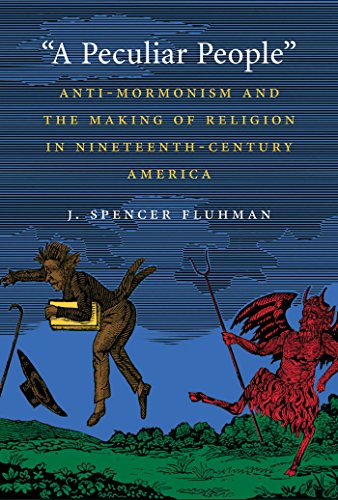
"A Peculiar People": Anti-Mormonism and the Making of Religion in Nineteenth-Century America
Product Description
Condition - Very Good
The item shows wear from consistent use but remains in good condition. It may arrive with damaged packaging or be repackaged.
"A Peculiar People": Anti-Mormonism and the Making of Religion in Nineteenth-Century America
Though the U.S. Constitution guarantees the free exercise of religion, it does not specify what counts as a religion. From its founding in the 1830s, Mormonism, a homegrown American faith, drew thousands of converts but far more critics. In "A Peculiar People", J. Spencer Fluhman offers a comprehensive history of anti-Mormon thought and the associated passionate debates about religious authenticity in nineteenth-century America. He argues that understanding anti-Mormonism provides critical insight into the American psyche because Mormonism became a potent symbol around which ideas about religion and the state took shape.
Fluhman documents how Mormonism was defamed, with attacks often aimed at polygamy, and shows how the new faith supplied a social enemy for a public agitated by the popular press and wracked with social and economic instability. Taking the story to the turn of the century, Fluhman demonstrates how Mormonism's own transformations, the result of both choice and outside force, sapped the strength of the worst anti-Mormon vitriol, triggering the acceptance of Utah into the Union in 1896 and also paving the way for the dramatic, yet still grudging, acceptance of Mormonism as an American religion.
Technical Specifications
You might also like

The Politics of American Religious Identity: The Seating of Senator Reed Smoot, Mormon Apostle
The "Book of Mormon": A Biography (Lives of Great Religious Books)

The Crucible of Doubt: Reflections On the Quest for Faith
How Wide the Divide?: A Mormon & an Evangelical in Conversation

The Mormon Menace: Violence and Anti-Mormonism in the Postbellum South