
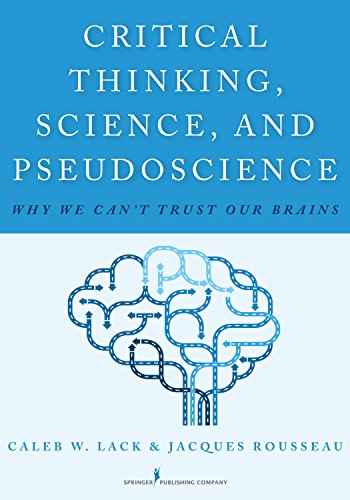
Critical Thinking, Science, and Pseudoscience: Why We Can't Trust Our Brains
Product Description
Condition - Very Good
The item shows wear from consistent use but remains in good condition. It may arrive with damaged packaging or be repackaged.
Critical Thinking, Science, and Pseudoscience: Why We Can't Trust Our Brains
This unique text for undergraduate courses teaches students to apply critical thinking skills across all academic disciplines by examining popular pseudoscientific claims through a multidisciplinary lens. Rather than merely focusing on critical thinking grounded in philosophy and psychology, the text incorporates the perspectives of biology, physics, medicine, and other disciplines to reinforce different categories of rational explanation. The book is also distinguished by its respectful approach to individuals whose ideas are, according to the authors, deeply flawed. Accessible and engaging, it describes what critical thinking is, why it is important, and how to learn and apply skillsóusing scientific methods--that promote it. The text also examines why critical thinking can be difficult to engage in and explores the psychological and social reasons why people are drawn to and find credence in extraordinary claims.
From alien abductions and psychic phenomena to strange creatures and unsupported alternative medical treatments, the text uses examples from a wide range of pseudoscience fields and brings evidence from diverse disciplines to critically examine these erroneous claims. Particularly timely is the text's examination of how, using the narrative of today's "culture wars," religion and culture impact science. The authors focus on how the human brain, rife with natural biases, does not process information in a rational fashion, and the social factors that prevent individuals from gaining an unbiased, critical perspective on information. Authored by a psychologist and a philosopher who have extensive experience teaching and writing on critical thinking and skeptical inquiry, this work will help students to strengthen their skills in reasoning and debate, become intelligent consumers of research, and make well-informed choices as citizens.
Key Features:
-
Addresses the foundations of critical thinking and how to apply it through the popular activity of examining pseudoscience
-
Explains why humans are vulnerable to pseudoscientific claims and how critical thinking can overcome fallacies and biases
-
Reinforces critical thinking through multidisciplinary analyses of pseudoscience
-
Examines how religion and culture impact science
-
Enlightens using an engaging, entertaining approach
-
Written by experienced and innovative scholar/educators well known in the skeptic community
-
Features teaching resources including an Instructor's Guide and Powepoint slides
Technical Specifications
You might also like

Bad Pharma: How Drug Companies Mislead Doctors and Harm Patients

Trick or Treatment: The Undeniable Facts about Alternative Medicine
Paranormality: Why we see what isn't there
Abducted: How People Come to Believe They Were Kidnapped by Aliens
Critical Thinking: Tools for Taking Charge of Your Professional and Personal Life
The Tao of Physics: An Exploration of the Parallels between Modern Physics and Eastern Mysticism

Wiser: Getting Beyond Groupthink to Make Groups Smarter