
University OF Nebraska Press
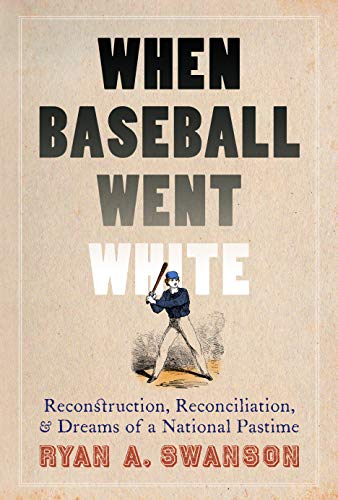
When Baseball Went White: Reconstruction, Reconciliation, and Dreams of a National Pastime
Free shipping with 3 or more products in your cart
Payflex: Pay in 4 interest-free payments of R347.00. Read the FAQ
R 2,080
33% off
Limited time offer
R 1,388
In stock
Low stock in USA warehouse Order soon to secure your order
Used, Good Condition
Duties, insurance and VAT included
Delivered in 10–20 working days —



Free shipping with 3 or more products in your cart
Secure checkout
Your payment is fully protected
Duties & VAT included
No surprise charges at the door
Tracked delivery
Track your order end to end
Returns support
30-day return window
Description
Condition - Very Good
The item shows wear from consistent use but remains in good condition. It may arrive with damaged packaging or be repackaged.
The story of Jackie Robinson valiantly breaking baseball’s color barrier in 1947 is one that most Americans know. But less recognized is the fact that some seventy years earlier, following the Civil War, baseball was tenuously biracial and had the potential for a truly open game. How, then, did the game become so firmly segregated that it required a trailblazer like Robinson? The answer, Ryan A. Swanson suggests, has everything to do with the politics of “reconciliation†and a wish to avoid the issues of race that an integrated game necessarily raised.
 The history of baseball during Reconstruction, as Swanson tells it, is a story of lost opportunities. Thomas Fitzgerald and Octavius Catto (a Philadelphia baseball tandem), for example, were poised to emerge as pioneers of integration in the 1860s. Instead, the desire to create a “national gameâ€â€”professional and appealing to white Northerners and Southerners alike—trumped any movement toward civil rights. Focusing on Philadelphia, Washington DC, and Richmond—three cities with large African American populations and thriving baseball clubs—Swanson uncovers the origins of baseball’s segregation and the mechanics of its implementation. An important piece of sports history, his work also offers a better understanding of Reconstruction, race, and segregation in America.   Â
Â
 The history of baseball during Reconstruction, as Swanson tells it, is a story of lost opportunities. Thomas Fitzgerald and Octavius Catto (a Philadelphia baseball tandem), for example, were poised to emerge as pioneers of integration in the 1860s. Instead, the desire to create a “national gameâ€â€”professional and appealing to white Northerners and Southerners alike—trumped any movement toward civil rights. Focusing on Philadelphia, Washington DC, and Richmond—three cities with large African American populations and thriving baseball clubs—Swanson uncovers the origins of baseball’s segregation and the mechanics of its implementation. An important piece of sports history, his work also offers a better understanding of Reconstruction, race, and segregation in America.   Â
Â
Â
Technical Specifications
Manufacturer
University of Nebraska Press
Height
24.1 cm
Length
15.9 cm
Width
2.5 cm
Weight
0.57 kg
Shipping & Delivery
Your order is shipped from the USA and delivered to your door in South Africa in 10–20 working days. All items are fully tracked.
Returns & Exchanges
We offer a 30-day return window. If something isn't right, contact our support team and we'll make it right.


